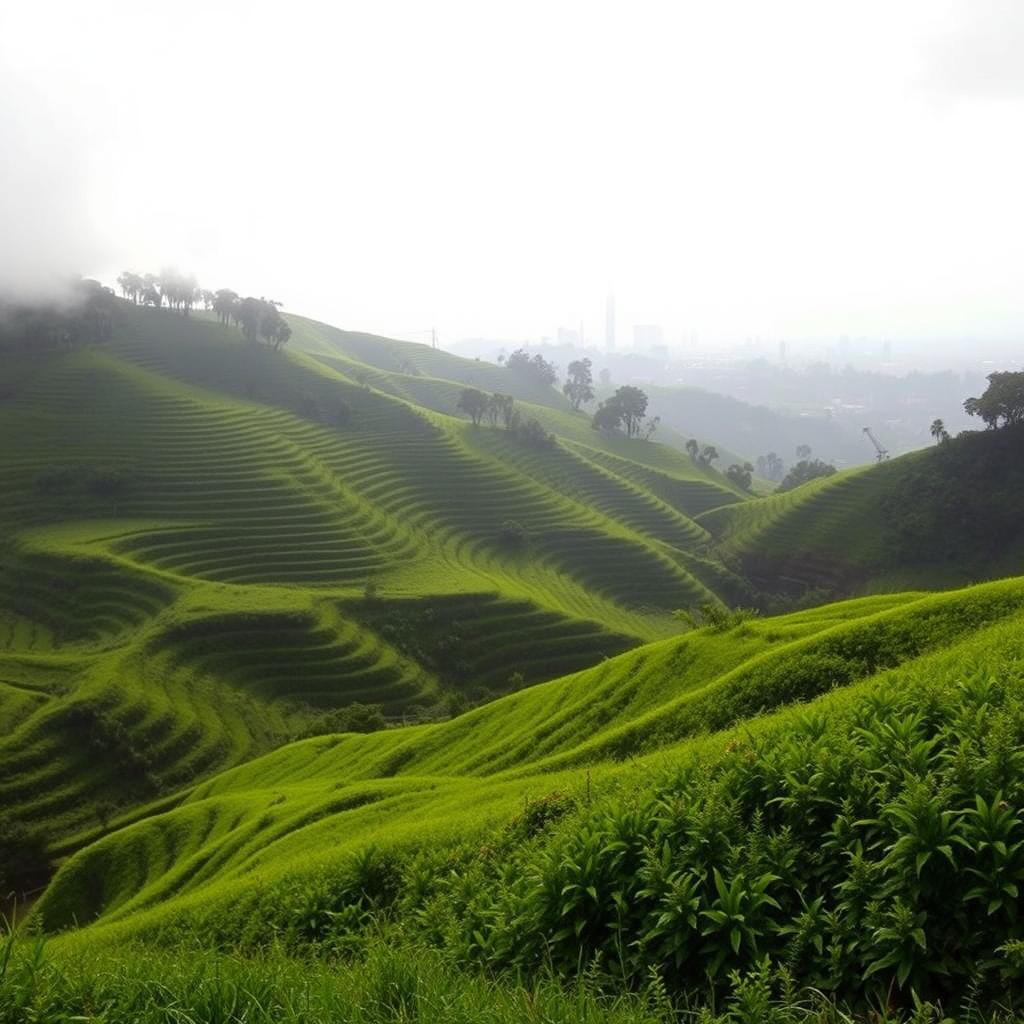
Rwanda
রুয়ান্ডা
Important Notice
This content is AI-generated and under editorial review. Visa rules can change at any time. Always verify the latest requirements with the relevant embassy or immigration authority before making travel decisions.
30
days max stay
6 months
passport validity required
Kinyarwanda, English, French
official language
English spoken
RWF
currency
About
Modern Rwanda cannot be understood without acknowledging the 1994 Genocide against the Tutsi, in which an estimated 800,000 to 1,000,000 people were killed in approximately 100 days. The genocide destroyed the country's social fabric, institutions, and economy. What followed is one of the most remarkable post-conflict recoveries in modern history. Under the 'never again' governance philosophy, Rwanda rebuilt itself into one of Africa's cleanest, safest, and most efficiently governed nations — though critics note that political freedoms remain limited under the centralized leadership model.
Rwanda is frequently called the 'Singapore of Africa.' This label is aspirational branding backed by genuinely strong governance: the country ranked 29th globally in the World Bank's Doing Business 2019 report (2nd in Africa, behind only Mauritius), achieved 8.9% GDP growth in 2024 (World Bank), and attracted $3.2 billion in registered FDI commitments that year (RDB, 2024). However, the economy remains tiny in absolute terms — Rwanda's entire GDP is smaller than many individual companies, and roughly 3% of Bangladesh's $460 billion GDP. The comparison to Singapore is most apt in governance philosophy (strong centralized leadership driving rapid development) rather than current economic output.
Rwanda has four official languages: Kinyarwanda (spoken by virtually all Rwandans), French, English, and Swahili. English has been the primary language of education since 2008 and is widely used in business and government in Kigali. The country is a founding member of the East African Community (EAC) and a member of the African Union, COMESA, and the AfCFTA.
Rwanda holds several unique distinctions: Kigali is widely recognized as the cleanest city in Africa, maintained through Umuganda — a mandatory monthly community service day held on the last Saturday of every month since 1995. Rwanda was one of the first countries globally to ban single-use plastic bags (2008). And Rwanda's parliament has the highest percentage of women in the world — 63.75% of the Chamber of Deputies as of 2024, a deliberate policy choice rooted in the post-genocide reality where women constituted 70% of survivors.
Last updated: 2026-05-28
Entry & Visa Requirements
- Visa-Free
- Rwanda has the most open visa policy in Africa. Since January 2018, all nationalities can enter Rwanda without a prior visa application — you receive entry at the border or airport. For Commonwealth member citizens (Bangladesh is a Commonwealth member), the 30-day entry is fee-waived, making it effectively visa-free. Non-Commonwealth, non-AU, non-Francophonie nationals pay a small fee for the same 30-day entry. Requirements are straightforward: valid passport (6+ months beyond departure), return ticket, and proof of accommodation.
This is Rwanda's distinguishing feature among African destinations: true visa-free entry for Bangladeshi passport holders. No eTA application (unlike Kenya), no advance fee payment, no processing time. You arrive and enter.
For work permits, Rwanda uses a class-based Temporary Resident Permit system administered by the Directorate General of Immigration and Emigration (DGIE, migration.gov.rw), with the Rwanda Development Board (RDB, rdb.rw) providing single-window facilitation. The most relevant permit classes for Bangladeshi workers are: H1 (skilled worker on the occupations-in-demand list, RWF 150,000 ~$115), H2 (employer-sponsored worker with qualifications, RWF 150,000 ~$115), B (agriculture/animal husbandry, RWF 150,000), C (skilled professional/artist, RWF 150,000), and F1/F3 (manufacturing/processing, RWF 150,000-250,000). Processing takes approximately one week.
The structural advantage Rwanda holds over Kenya is dramatic. Unlike Kenya, which requires employers to prove no Kenyan can fill the role, charges KES 500,000/year (~$3,850/year) for the Class D work permit, and mandates a Kenyan understudy — Rwanda has no labor market test and the permit costs roughly $115 to obtain. Over a 3-year contract, a Kenyan work permit costs approximately $11,550 in fees alone; a Rwandan permit costs approximately $115. This makes Rwanda dramatically easier and cheaper to enter as a foreign worker.
Required documents: passport, signed employment contract, CV, academic certificates, police clearance certificate, medical certificate, passport photos, and professional licences where applicable. The employer initiates the process through the DGIE portal or RDB's business procedures system (businessprocedures.rdb.rw). - Return ticket required
- No proof of funds required
Work Permit Pathway
The employer initiates the application. Unlike many African countries, Rwanda does not require a labor market test — there is no obligation to prove that a Rwandan national could not fill the position. This is a deliberate policy choice to attract foreign talent, particularly in construction, ICT, manufacturing, and hospitality where skills gaps exist.
The most common permit for Bangladeshi workers is the H2 (employer-sponsored worker with qualifications), costing RWF 150,000 (~$115). Processing takes approximately one week — significantly faster than most African countries. The permit is valid for 2 years and renewable. For skilled workers on Rwanda's occupations-in-demand list, the H1 permit applies at the same fee.
Required documents: valid passport, signed employment contract specifying role and salary, CV with academic certificates (certified copies), police clearance certificate from country of origin, medical certificate, passport-sized photographs, and professional licences where applicable. The employer must provide company registration, tax clearance, and a letter justifying the hire.
Dependant permits are available for spouse and children. Rwanda does not offer a direct path from work permit to permanent residency for most foreign workers, though long-term residents can apply through separate immigration channels. The Irembo e-government portal (irembo.gov.rw) handles online applications and fee payments.
Social security: both employer and employee must register with RSSB (Rwanda Social Security Board). As of 2025, pension contributions are 12% of gross salary — 6% from employer and 6% from employee (RSSB, 2025). This is deducted from salary automatically.
Last updated: 2026-05-28
Overstay Penalties & Consequences
Registration violations — failing to register with immigration or overstaying your authorized period — can result in imprisonment of 8 days to 3 months and/or a fine of RWF 5,000 (~$4). For repeat registration violations, penalties are doubled. Aiding or facilitating immigration violations carries imprisonment of 15 days to 3 months and/or fines of RWF 10,000 to 500,000 (~$8 to $385) (Refworld, Law 17/99; DGIE, Law 57/2018).
For significant overstays, deportation is the standard outcome, accompanied by a ban on future entry. Rwanda's immigration law distinguishes between 'deportation' (constraining a foreigner to leave) and 'expulsion' (ordering a foreigner to leave against their will) — both result in removal from the country.
Rwanda's immigration system is increasingly digital. Penalties can be paid online through the Irembo e-government portal (irembo.gov.rw). This digitization means overstays are tracked systematically rather than relying solely on physical checkpoints.
Practical advice: Rwanda's small size and efficient governance mean that immigration irregularities are more likely to be detected than in larger, less organized countries. Set calendar reminders 30 days before your permit expires. If your employer is handling renewal, confirm the timeline in writing. If you discover your permit has lapsed, contact DGIE immediately — voluntary disclosure typically receives more lenient treatment than being discovered during a random check.
Job Market
Tourism contributed 9.8% of GDP in 2024, generating Fr 1.9 trillion in revenue (Travel & Tour World). Mountain gorilla trekking in Volcanoes National Park (permits cost $1,500 each) anchors the high-end tourism sector. Kigali ranked 2nd in Africa for MICE (meetings, incentives, conferences, exhibitions) events, supported by the Kigali Convention Centre. International hotel chains (Marriott, Radisson Blu) hire foreign workers for management and specialized hospitality roles.
The ICT sector is real but nascent. Norrsken House Kigali — Africa's largest entrepreneurship hub — houses 320 companies and helped entrepreneurs raise $57 million in 2022-2023 (IEEE, 2023). Kigali Innovation City broke ground in September 2024, with Carnegie Mellon University Africa and Africa Leadership University as anchor institutions. However, most tech activity is startup/early-stage, not large-scale employment. Rwanda produces approximately 2,600 tech graduates annually.
Manufacturing is growing under the 'Made in Rwanda' initiative, which promotes local production and import substitution through tax incentives. Agriculture employs 72% of Rwandans (coffee and tea are major export crops) but offers little opportunity for foreign workers — these jobs are filled locally.
A critical structural advantage: Rwanda does not impose a formal labor market test or quota system for foreign workers. There is no requirement to prove a Rwandan national could not fill the role. Combined with the ~$115 work permit fee (versus Kenya's $3,850/year), this makes Rwanda one of Africa's most accessible countries for foreign worker entry. However, this openness comes with a trade-off: weak wage protection (see salary section below).
Sectors predominantly filled by locals and unlikely to hire foreigners: domestic work, security, basic retail, government/civil service.
Last updated: 2026-05-28
Salary & Payments
| Sector | Min | Max | Currency |
|---|---|---|---|
| 0 | 0 | RWF/mo | |
| 0 | 0 | RWF/mo | |
| 0 | 0 | RWF/mo | |
| 0 | 0 | RWF/mo | |
| 0 | 0 | RWF/mo | |
| 0 | 0 | RWF/mo | |
| 0 | 0 | RWF/mo | |
| 0 | 0 | RWF/mo |
Rwanda has NO enforced national minimum wage. The statutory minimum of RWF 8,600 per month (~$6.60) has been unchanged since 1974 and is not enforced (Rivermate, 2025; WageIndicator Rwanda). The 2018 Labour Code authorized the Minister of Labour to set a minimum wage via Ministerial Order, but this order has never been issued. In practice, wages are individually negotiated between employer and worker with no legal floor.
The average gross monthly salary in Rwanda is approximately RWF 260,000-290,000 (~$200-225) (Africarrieres, 2026). However, this average is heavily skewed by higher-paying sectors (banking, telecom, NGOs). Agricultural workers earn RWF 500-1,000 per day (~$0.38-0.77), which at 25 working days per month translates to $10-19 — genuinely below subsistence. Sector-specific daily minimums exist informally: construction RWF 1,500-5,000/day (~$1.15-3.85), tea industry RWF 500-1,000/day.
For Bangladeshi workers: Rwanda's wages are significantly lower than Kenya's across most comparable sectors, and dramatically lower than Gulf states. Construction is the most viable sector for foreign workers — skilled tradespeople (electricians, plumbers, masons) can earn $100-200/month, while unskilled construction labourers earn $70-240/month depending on experience. IT/tech offers the best wages ($200-400/month) but requires specific qualifications.
The combination of no minimum wage, no labor market test, and cheap permits means workers must negotiate carefully. Before accepting any offer, insist on a written employment contract specifying: exact monthly salary in RWF, payment frequency, housing arrangements (whether employer-provided or an allowance), and RSSB pension deduction (6% from employee). The contract is your only protection — there is no statutory wage floor to fall back on.
All salary figures use an approximate exchange rate of 1,300 RWF per 1 USD, which fluctuates.
Last updated: 2026-05-28
Where to Apply
RDB — Rwanda Development Board
Official PortalDGIE — Directorate General of Immigration and Emigration
Official PortalIrembo — e-Government Services Portal
Official PortalRSSB — Rwanda Social Security Board
Official PortalRwandAir
Major EmployerBank of Kigali (BK Group)
Major EmployerMTN Rwanda
Major EmployerMarriott Kigali
Major EmployerRadisson Blu Kigali
Major EmployerNorrsken House Kigali
Major EmployerLast updated: 2026-05-28
Housing & Living
Housing (Kigali):
1-bedroom city centre: ~$567/month (RWF 737,000). 1-bedroom outside centre: ~$364/month (RWF 473,000). Shared room (Kimironko, Remera areas): estimated $80-150/month. Foreign workers typically live in Kicukiro, Remera, or Kimironko neighbourhoods. Nyamirambo is the most affordable area and also has the highest Muslim concentration.
Food:
Local restaurant meal: RWF 2,500-4,000 ($1.90-3.10). Rice 1kg: RWF 1,300 ($1.00). Eggs dozen: RWF 2,400 ($1.85). Drinking water 1.5L: RWF 700 ($0.54). Cooking at home: estimated $80-120/month food costs.
Transport:
Moto-taxi (most popular): RWF 500-3,000 ($0.38-2.30) per trip. Public bus: RWF 210-300 ($0.16-0.23) per ride — uses Tap&Go card system. Yego Moto (ride-hailing app): slightly more expensive than street moto-taxis but safer and metered.
Mobile & Internet (remarkably cheap):
MTN Rwanda 7GB/week: RWF 1,000 ($0.77) — significantly cheaper than Bangladesh. MTN 30GB/month: RWF 3,000 ($2.30). Airtel Rwanda offers competitive rates. Rwanda has 4G coverage across Kigali and major towns.
Total Monthly Estimate:
With 1-bedroom outside centre: $789-811/month (Numbeo/LivingCost 2026). Single worker in shared room: $350-500/month achievable. Comparison: slightly cheaper than Nairobi, more expensive than Dhaka.
Currency: Rwandan Franc (RWF). Exchange rate: ~1,300 RWF = $1 USD (2026). MTN MoMo and Airtel Money are ubiquitous — mobile money is used more than cash. Bank account opening is straightforward but MoMo is sufficient initially. Sources: Numbeo Kigali May 2026, LivingCost.org, MTN Rwanda tariff page.
Social & Culture
Muslim Community:
Rwanda's Muslim population is approximately 2% according to the 2022 national census, though the Rwanda Muslim Community (RMC) organization claims 12-15%. There are approximately 500 mosques nationwide. The largest concentration is in Kigali's Nyamirambo neighbourhood, which has multiple mosques, halal butchers, and a distinctly Muslim commercial character. The Eastern Province (bordering Tanzania) also has a notable Muslim population. Friday prayers (Jummah) are readily accessible in Kigali. Ramadan is observed by the community though it is not a public event as in Muslim-majority countries. Sources: US State Department International Religious Freedom Report 2022, Wikipedia Islam in Rwanda.
Halal Food:
Halal meat is available from butchers in Nyamirambo and some supermarkets in Kigali. The Khana Khazana Indian restaurant in Kigali serves halal food with South Asian flavours familiar to Bangladeshi palates. Several Lebanese and Middle Eastern restaurants in Kinyinya and Kimihurura areas also serve halal. Outside Kigali, halal options become very limited — you may need to source from Nyamirambo and transport. Rwanda's staple foods (rice, beans, plantain, cassava) are inherently halal but meat verification requires care outside known establishments.
Climate (a significant advantage):
Kigali sits at 1,500 metres altitude — this makes it dramatically cooler and more comfortable than Dhaka. Daytime temperatures: 26-28°C. Nighttime: 15-17°C year-round. You will need a light jacket for evenings — a stark contrast to Bangladesh's heat. There is no extreme monsoon season; Rwanda has two rainy seasons (February-May, September-December) with moderate rainfall. Humidity is significantly lower than Bangladesh. This highland climate is one of Kigali's most appealing features for South Asian workers accustomed to tropical heat.
Language:
English is one of Rwanda's four official languages (alongside Kinyarwanda, French, and Swahili). Since 2008, English has been the primary medium of instruction in schools. Educated Rwandans, especially in Kigali's business and hospitality sectors, speak English fluently. Government services, signage, and official communications are available in English. This is a significant practical advantage over many other African or Middle Eastern destinations where language barriers create daily friction. However, street-level and market interactions often default to Kinyarwanda.
Cultural Context:
Rwandan society is notably orderly by regional standards. Monthly community service (Umuganda, last Saturday of each month) is mandatory for all residents including foreign workers — you sweep streets, clear drains, or plant trees with your neighbours. This is non-negotiable and reflects Rwanda's governance philosophy. Plastic bags are banned nationwide (since 2008). Alcohol consumption is common but not culturally dominant. Crime rates in Kigali are remarkably low. Gender equality is constitutionally mandated — Rwanda has the world's highest female parliamentary representation (63.75% as of 2024).
Honest Assessment:
If you are considering Rwanda, prepare for cultural isolation from the Bangladeshi community. There are no Bengali-language services, no Bangladeshi grocery stores, no community associations. The Muslim infrastructure in Nyamirambo provides some religious comfort but is not a substitute for the cultural support networks available in destinations like Malaysia, Saudi Arabia, or even Kenya's coastal cities. The trade-off: Rwanda offers the easiest legal entry and cheapest work permits in Africa, combined with genuine safety and cleanliness, but at the cost of complete cultural self-reliance. Sources: HalalTrip, Visit Rwanda, US State Dept IRF 2022.
Business Opportunities
Trade Bloc Access:
Rwanda is a member of the East African Community (EAC, ~300M consumers), Common Market for Eastern and Southern Africa (COMESA, ~560M consumers), and the African Continental Free Trade Area (AfCFTA). This gives a Rwanda-registered business tariff-free or preferential access to the largest free trade area in the world by number of countries. For Bangladeshi entrepreneurs, this means a Rwanda-incorporated company can export to 54 African countries under AfCFTA — a market of 1.4 billion people.
Kigali International Financial Centre (KIFC):
Rwanda's flagship financial hub offers extraordinary incentives: 3% corporate tax for qualifying financial services companies (vs standard 30%), 0% withholding tax on dividends, interest, and royalties, and 0% capital gains tax. This is designed to compete with Mauritius, Dubai, and Singapore as a holding company jurisdiction. For Bangladeshi businesses looking to structure African operations, KIFC is a compelling option. Source: KIFC official website.
Special Economic Zones:
Kigali SEZ: 274 hectares, operational since 2013, houses 100+ companies. Bugesera SEZ: 335 hectares, $100M investment, near the under-construction Bugesera International Airport. Incentives include: 0% corporate tax for first 5 years in priority sectors, reduced rates thereafter, duty-free import of raw materials and equipment, one-stop-shop administrative services. Priority sectors: ICT, manufacturing, agro-processing, logistics. Source: RDB SEZ overview.
Made in Rwanda Initiative:
Government program to reduce imports and boost domestic manufacturing. Creates opportunities for: textile/garment production (Bangladesh's core competency — Rwanda currently imports most clothing), food processing, construction materials, and light manufacturing. A Bangladeshi entrepreneur with garment industry experience could find a receptive environment, though the domestic market is small (~14 million people).
BD-Rwanda Trade Corridor Potential:
Bangladesh to Rwanda: ready-made garments, textiles, pharmaceuticals, jute products. Rwanda to Bangladesh: coffee (specialty grade, premium pricing), tea, coltan, tin. Current bilateral trade is minimal — this is an opportunity, not an established corridor. The EAC customs union means goods entering Rwanda can move freely to Uganda, Kenya, Tanzania, Burundi, DRC, and South Sudan.
Practical Barriers (honest assessment):
Rwanda's economy is tiny: $14.25 billion GDP (Bangladesh is $460B). Domestic consumer purchasing power is low. Banking access for new foreign nationals takes time (start with MTN MoMo). The business environment rewards patience and relationship-building — quick profits are unlikely. Import costs are high (Rwanda is landlocked; goods come through Mombasa or Dar es Salaam ports, adding 2-4 weeks transit and 15-25% to costs). Corruption is genuinely low by African standards, but regulatory compliance is strict.
Registration Process:
Company registration through RDB: 6 hours online or same-day in person. Requirements: passport, proof of address, business plan, minimum capital (varies by company type, no minimum for private limited). Foreign nationals can own 100% of a Rwandan company — no local partner requirement. Work permit for business owners: Category B or C through DGIE. Sources: RDB business registration, World Bank Doing Business 2020.
Content Quality
AI Generated — Under ReviewVerify with Embassy
Visa rules change frequently. Always verify the latest entry requirements with the embassy or consulate of your destination country before making travel plans.
View Embassy DirectoryCost of Living
Kigali is one of East Africa's cleanest and safest cities, but housing costs are disproportionately high relative to local salaries — approximately 186% of the average paycheck goes to rent (Numbeo 2026). Housing (Kigali): 1-bedroom city centre: ~$567/month (RWF 737,000). 1-bedroom outside centre: ~$364/month (RWF 473,000). Shared room (Kimironko, Remera areas): estimated $80-150/month. Foreign workers typically live in Kicukiro, Remera, or Kimironko neighbourhoods. Nyamirambo is the most affordable area and also has the highest Muslim concentration. Food: Local restaurant meal: RWF 2,500-4,000 ($1.90-3.10). Rice 1kg: RWF 1,300 ($1.00). Eggs dozen: RWF 2,400 ($1.85). Drinking water 1.5L: RWF 700 ($0.54). Cooking at home: estimated $80-120/month food costs. Transport: Moto-taxi (most popular): RWF 500-3,000 ($0.38-2.30) per trip. Public bus: RWF 210-300 ($0.16-0.23) per ride — uses Tap&Go card system. Yego Moto (ride-hailing app): slightly more expensive than street moto-taxis but safer and metered. Mobile & Internet (remarkably cheap): MTN Rwanda 7GB/week: RWF 1,000 ($0.77) — significantly cheaper than Bangladesh. MTN 30GB/month: RWF 3,000 ($2.30). Airtel Rwanda offers competitive rates. Rwanda has 4G coverage across Kigali and major towns. Total Monthly Estimate: With 1-bedroom outside centre: $789-811/month (Numbeo/LivingCost 2026). Single worker in shared room: $350-500/month achievable. Comparison: slightly cheaper than Nairobi, more expensive than Dhaka. Currency: Rwandan Franc (RWF). Exchange rate: ~1,300 RWF = $1 USD (2026). MTN MoMo and Airtel Money are ubiquitous — mobile money is used more than cash. Bank account opening is straightforward but MoMo is sufficient initially. Sources: Numbeo Kigali May 2026, LivingCost.org, MTN Rwanda tariff page.
Free Tools to Help You Apply
Apply directly to overseas employers.
All tools are free. Cover letter and contract checker require a free account.
Before You Travel
Visa-free entry is just the first step. Real preparation matters.
- • Passport validity (6+ months beyond travel date)
- • Return/onward ticket booking
- • Proof of funds documentation
- • Currency exchange arrangement
- • Vaccinations (per destination requirements)
- • Emergency contacts (embassy, family)
Sponsored Agencies
SwissAlps Talent
Switzerland and Austria — premium opportunities
View profile →NEW STAR RECRUITING AGENCY
Mk Nasir uddin
View profile →France Recruit Pro
Direct French site contracts
View profile →PolandWork Agency
Direct contracts with Polish factories
View profile →Sponsored content. Verify agencies with BMET before any payment.
Last verified
28 May 2026
Visa rules may change — always verify before travel.


