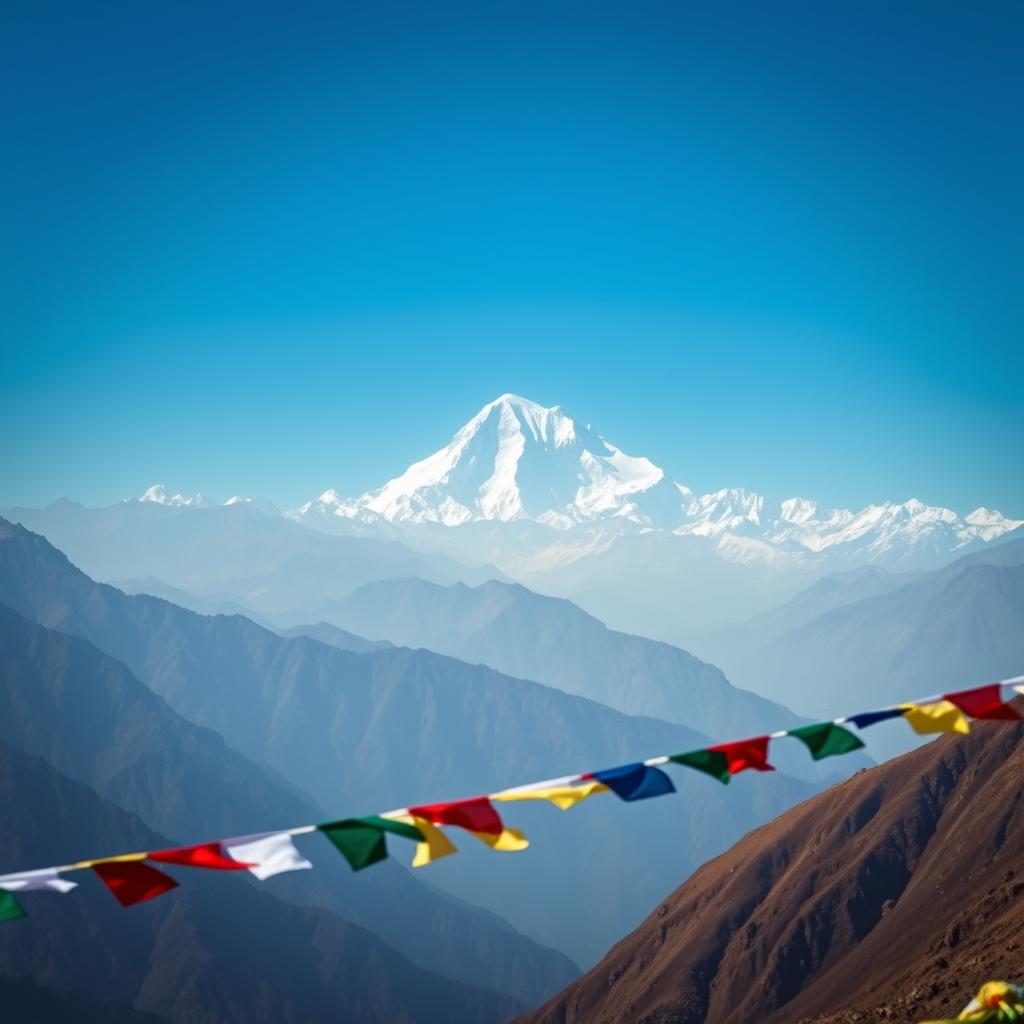
Nepal
নেপাল
Important Notice
This content is AI-generated and under editorial review. Visa rules can change at any time. Always verify the latest requirements with the relevant embassy or immigration authority before making travel decisions.
90
days max stay
6 months
passport validity required
Nepali
official language
NPR
currency
About
The country's economy centers on tourism, agriculture, and remittance-funded services. Kathmandu's growing service sector and Nepal's massive hydropower development projects create employment opportunities for foreign workers, particularly in construction and engineering.
Entry & Visa Requirements
- Visa on Arrival
- Visa on arrival at Tribhuvan International Airport and land borders. 15-day ($30), 30-day ($50), or 90-day ($125).
- No return ticket required
- No proof of funds required
Work Permit Pathway
Overstay Penalties & Consequences
Daily fine: USD 8 per day total (USD 3 visa extension fee + USD 5 overstay penalty). This accrues from the first day after visa expiry and must be settled before departure or visa renewal.
Escalation thresholds (per Nepal Immigration penalty schedule):
- Under 150 days overstay: The USD 5/day late fine applies consistently. At this level, the matter can typically be resolved financially at the Department of Immigration.
- Over 150 days overstay: The Director General of Immigration may impose a lump sum penalty of up to NPR 50,000 (approximately USD 375). At this point, the overstay is treated as a serious immigration violation.
- Criminal prosecution: Under Section 10(4) of the Immigration Act, willful overstay can result in 1 month to 3 years imprisonment and/or a fine of NPR 5,000-50,000. This is not theoretical — prosecution occurs for gross violations.
- Deportation: Ordered for overstays exceeding approximately 90 days without valid justification. The deportee bears all costs.
- Entry ban: 1 to 10 years, or permanent, depending on the severity of the violation and whether deportation was involved.
Enforcement level: Nepal's immigration enforcement is moderate — bureaucratic but functional at exit points. Overstay fines are systematically collected at departure. The Department of Immigration maintains digital records and unpaid penalties are flagged at all exit points (airport and land borders). Serious overstayers (90+ days) face real consequences including detention, deportation, and multi-year entry bans.
For Bangladeshi workers: If your tourist visa or work permit is approaching expiry, apply for extension or renewal BEFORE it lapses. The cost of timely renewal (NPR 15,000-20,000 for work permits) is far less than the daily penalties, potential imprisonment, and entry bans for overstay.
Job Market
Salary & Payments
| Sector | Min | Max | Currency |
|---|---|---|---|
| 0 | 0 | NPR/mo | |
| 0 | 0 | NPR/mo | |
| 0 | 0 | NPR/mo | |
| 0 | 0 | NPR/mo | |
| 0 | 0 | NPR/mo | |
| 0 | 0 | NPR/mo | |
| 0 | 0 | NPR/mo | |
| 0 | 0 | NPR/mo |
**Nepal is a net labor exporter — Nepalis themselves go abroad for work. Salaries here are comparable to or below Bangladesh garment-sector levels. Nepal is generally NOT a viable mass-employment destination for Bangladeshi workers.**
### Wage Comparison with Bangladesh
Bangladesh's minimum wage for garment workers is $113/month (2023 revision). Most of Nepal's accessible sectors pay $80-$250/month — at or below this benchmark. The two exceptions (hydropower engineering at $600-$1,200 and IT at $400-$800) require specialized qualifications that most labor migrants do not possess.
### The Remittance Math Does Not Work
A Bangladeshi worker earning $200/month in Nepal faces:
- Rent in Kathmandu: $80-$120/month for a shared room
- Food: $60-$80/month (prices comparable to Dhaka)
- Transport: $15-$25/month
- Remaining for remittance: $0-$25/month
Compare this to Gulf states where the same worker might earn $400-$600/month with employer-provided housing and food, leaving $300-$400/month for remittance. **Nepal cannot compete as a remittance destination.**
### Payment Reliability
For the narrow niches where Bangladeshis can work:
- **Hydropower EPC contractors**: Generally reliable; international funding (World Bank, ADB, Chinese development banks) ensures payment schedules. Delays of 1-2 months possible during project disputes.
- **IT companies**: Payment reliability is comparable to Bangladesh's IT sector. Startups may delay; established firms (Leapfrog, Fusemachines) pay on time.
- **Government-funded projects**: Subject to Nepal's chronic budget disbursement delays. Fiscal year starts mid-July; first-quarter payments often delayed until Q2.
### Currency Risk
The Nepali Rupee (NPR) is pegged to the Indian Rupee at 1.6:1 and floats against the USD. As of 2024, 1 USD ≈ 133 NPR. The peg provides stability against INR but not against USD/BDT. Remitting NPR → BDT involves double conversion (NPR → INR → BDT or NPR → USD → BDT), with 2-4% total conversion loss.
### Minimum Wage
Nepal's minimum wage was revised to NPR 17,300/month ($130) in 2023. Enforcement is reasonable in Kathmandu's formal sector but weak in rural areas and informal employment. The minimum wage is marginally higher than Bangladesh's garment minimum but lower than Bangladesh's pharmaceutical or telecom sector wages.
Where to Apply
Department of Labour and Occupational Safety
Official PortalDepartment of Industry (DoI)
Official PortalDepartment of Immigration
Official PortalNepal Investment Board (IBN)
Official PortalNepal Electricity Authority (NEA)
Major EmployerLeapfrog Technology
Major EmployerFusemachines
Major EmployerCloudFactory
Major EmployerChina Gezhouba Group (CGGC)
Major EmployerUpper Tamakoshi Hydropower Ltd
Major EmployerHousing & Living
Social & Culture
Business Opportunities
### The Honest Assessment
Nepal's economy is small (GDP $40.8 billion, 2023) and heavily dependent on remittances (23-25% of GDP), tourism, and agriculture. It is NOT a high-growth market comparable to Cambodia or Kenya. However, specific niches exist due to Nepal's unique regulatory environment and geographic position.
### 1. IT Company (Zero FDI Minimum — Best Opportunity)
Nepal's Department of Industry allows 100% foreign ownership of IT companies with **zero minimum FDI requirement**. This is genuinely unique — most countries require $50,000–$500,000 minimum investment for foreign-owned companies.
**What this means practically:**
- Register a company with minimal capital (NPR 100,000 / ~$750)
- Hire Nepali developers (abundant, affordable, English-speaking)
- Serve international clients (Bangladesh, India, global)
- Nepal's internet infrastructure has improved significantly (fiber-optic in Kathmandu Valley)
**Realistic revenue**: $1,000–$5,000/month for a 3-5 person team serving international clients. This is the ONLY business opportunity in Nepal where Bangladeshi entrepreneurs have a genuine comparative advantage (Bangladesh's IT sector experience is deeper than Nepal's).
### 2. Import-Export (Bangladesh–Nepal Trade)
Bilateral trade is ~$700 million (2023), heavily skewed toward Bangladeshi imports from India via Nepal. Opportunities:
- **Bangladeshi garments to Nepal**: Nepal imports ~$100 million in garments; Bangladesh can compete on price
- **Nepali handicrafts to Bangladesh**: Pashmina, handmade paper, thangka paintings — niche market
- **Third-country re-export**: Nepal's trade agreements (India, China, SAFTA) create re-export possibilities
**Barrier**: Requires established business networks in both countries; not suitable for first-time entrepreneurs.
### 3. Education Services
500-800 Bangladeshi students in Nepal represent a service gap:
- **Accommodation/hostel for Bangladeshi students**: Halal food, Bangla-speaking staff, exam preparation support
- **Admission consultancy**: MBBS programs in Nepal are 30-40% cheaper than Bangladesh's private medical colleges
- **Language training**: Nepali language courses for incoming students/workers
### 4. Hydropower Consulting (Specialist Only)
If you have genuine hydropower engineering experience, Nepal's 83,000 MW potential creates consulting demand. This is NOT for general business people — requires registered engineering firm and Nepali professional licensing.
### Sectors to AVOID
- **Restaurant/hospitality**: Oversaturated; no competitive advantage over Nepali operators
- **Real estate**: Foreign ownership of land is prohibited in Nepal
- **Banking/financial services**: Restricted to Nepali citizens
- **Agriculture**: Foreign ownership restrictions; subsistence-level returns
- **Retail**: Language barrier; local competition overwhelming
- **Construction contracting**: Nepali licensing requirements; domestic contractors entrenched
### Company Registration Process
1. Reserve company name at Office of Company Registrar (OCR)
2. Open bank account and deposit minimum capital
3. Register at OCR — requires: passport copies, company memorandum, articles of association
4. Obtain PAN from Inland Revenue Department
5. Industry registration at Department of Industry (for foreign-owned companies)
6. Timeline: 2-4 weeks (Kathmandu); can be done remotely through a Nepali law firm
7. Cost: NPR 50,000–100,000 ($375–$750) for legal/registration fees
Content Quality
AI Generated — Under ReviewVerify with Embassy
Visa rules change frequently. Always verify the latest entry requirements with the embassy or consulate of your destination country before making travel plans.
View Embassy DirectoryCost of Living
Low. One of the most affordable destinations. Shared room in Kathmandu $50-100/month. Local meals (dal bhat) $1-2. Similar food culture makes adjustment easy. Thamel area has many budget options.
Free Tools to Help You Apply
Apply directly to overseas employers.
All tools are free. Cover letter and contract checker require a free account.
Before You Travel
Visa-free entry is just the first step. Real preparation matters.
- • Passport validity (6+ months beyond travel date)
- • Return/onward ticket booking
- • Proof of funds documentation
- • Currency exchange arrangement
- • Vaccinations (per destination requirements)
- • Emergency contacts (embassy, family)
Sponsored Agencies
France Recruit Pro
Direct French site contracts
View profile →PolandWork Agency
Direct contracts with Polish factories
View profile →EuroStaff Solutions
Licensed EU recruiter since 2015
View profile →SwissAlps Talent
Switzerland and Austria — premium opportunities
View profile →Sponsored content. Verify agencies with BMET before any payment.
Last verified
26 May 2026
Visa rules may change — always verify before travel.


