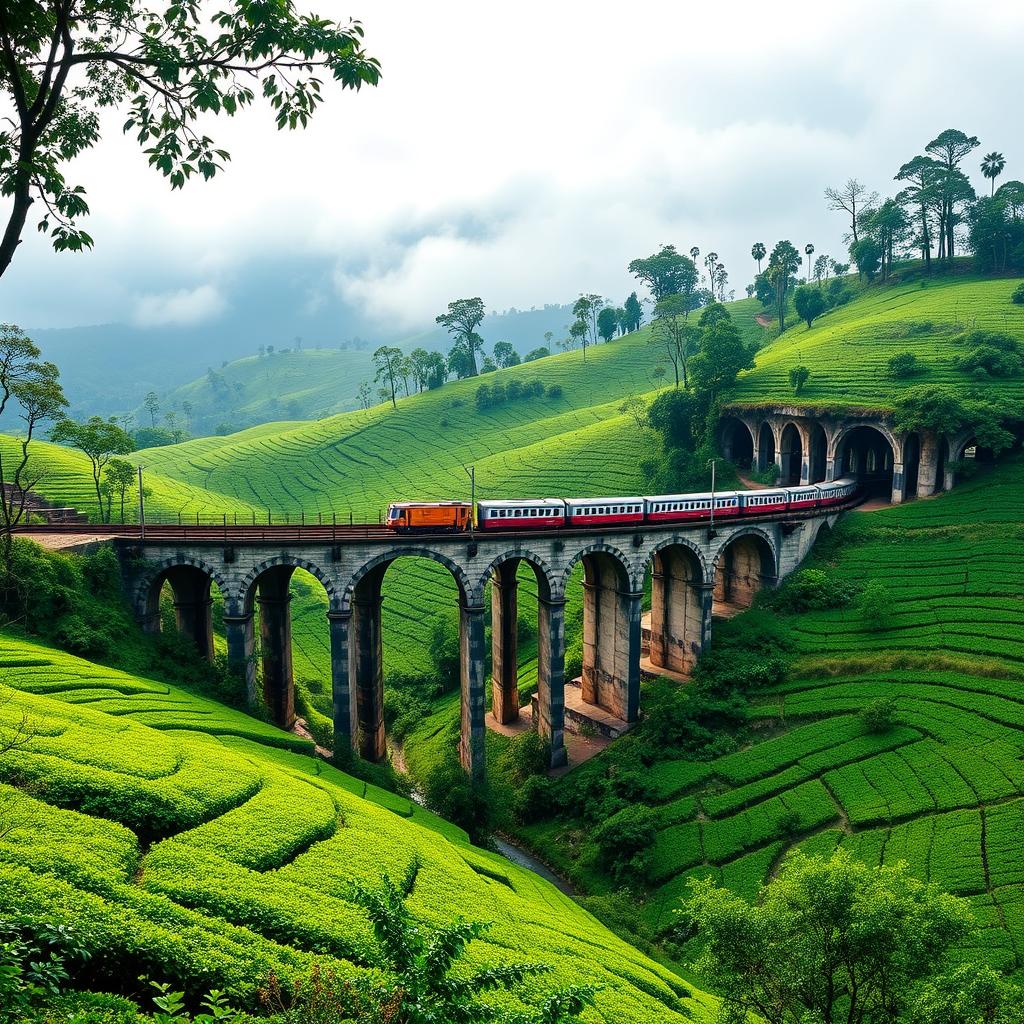
Sri Lanka
শ্রীলঙ্কা
Important Notice
This content is AI-generated and under editorial review. Visa rules can change at any time. Always verify the latest requirements with the relevant embassy or immigration authority before making travel decisions.
30
days max stay
6 months
passport validity required
Sinhala, Tamil
official language
English spoken
LKR
currency
About
Sri Lanka is an island nation of 22.2 million people in the Indian Ocean, 80 km southeast of India's southern tip. Despite a severe economic crisis in 2022 (sovereign default, 70% inflation, IMF bailout), Sri Lanka is recovering with a fundamentally stronger institutional and infrastructure base than most countries in this visa-free enrichment set.
### Why Sri Lanka Matters for Bangladeshi Workers
Sri Lanka's significance is not mass employment — it is a **specialized opportunity market** driven by three transformative infrastructure projects:
1. **Colombo Port City** — A $15 billion Chinese-funded reclaimed land SEZ (269 hectares) with its own regulatory framework, tax incentives, and demand for construction/IT/financial services workers
2. **Colombo International Financial Centre (CIFC)** — Part of Port City, designed to compete with Dubai and Singapore as a regional financial hub
3. **Hambantota International Port** — Chinese-leased deep-water port with growing logistics operations
### Geographic and Cultural Context
- **Capital**: Sri Jayawardenepura Kotte (legislative); Colombo (commercial)
- **Population**: 22.2 million (2024)
- **GDP per capita**: $3,354 (2023) — significantly higher than Bangladesh ($2,688)
- **Religion**: Buddhist 70.2%, Hindu 12.6%, Muslim 9.7%, Christian 7.4%
- **Time zone**: UTC+5:30 (same as India, 30 minutes behind Bangladesh)
### The 2022 Crisis and Recovery
Sri Lanka's 2022 economic collapse (triggered by COVID revenue loss, Rajapaksa-era tax cuts, and foreign reserve depletion) caused severe hardship but also created opportunities. The $2.9 billion IMF Extended Fund Facility (2023) imposed structural reforms that are reshaping the economy. Construction of Colombo Port City continued throughout the crisis, and foreign direct investment in the SEZ is accelerating as reforms take hold.
### Realistic Assessment
Sri Lanka is NOT a destination for unskilled labor migration. The country has its own labor surplus (unemployment 5.2%, underemployment much higher). However, for Bangladeshi professionals in construction engineering, IT, port logistics, and financial services, Sri Lanka offers genuine opportunities — particularly within the Port City SEZ ecosystem where foreign worker quotas are more liberal than mainland Sri Lanka.
Entry & Visa Requirements
- eTA
- ## Entry Method: Electronic Travel Authorization (ETA)
### The ETA System
Sri Lanka requires an **Electronic Travel Authorization (ETA)** for Bangladeshi passport holders. As of January 2024, the ETA system has been overhauled:
- **Application**: Online via eta.gov.lk (new system replaced old system in April 2024)
- **Fee**: $50 USD (tourist/business short visit)
- **Processing**: Usually within 24-48 hours; can take up to 3 business days
- **Validity**: 30 days from date of entry (extendable to 90 days at Department of Immigration in Colombo)
- **Entry type**: Single entry for tourist; double entry for business
### IMPORTANT: ETA is NOT a Visa-Free Entry
Despite Sri Lanka appearing in "visa-free" lists for Bangladeshi passports, the ETA is a **mandatory pre-arrival authorization**. You CANNOT board a flight to Colombo without an approved ETA. Airlines will deny boarding.
### Extension Process
- **Where**: Department of Immigration and Emigration, Colombo
- **Extension fee**: $50 for 30-day extension (up to 90 days total)
- **Requirements**: Valid passport, return ticket, proof of accommodation, proof of funds
- **Processing**: 3-5 business days
### Converting to Work Visa
1. Employer applies for work visa on your behalf at Department of Immigration
2. Board of Investment (BOI) clearance required for Port City/SEZ positions
3. Processing: 2-4 weeks after employer submission
4. **Cannot convert ETA to work visa while in Sri Lanka** — must exit and re-enter on work visa (though this rule has exceptions for Port City workers under the Colombo Port City Economic Commission)
### Documents Required at Immigration
- Passport valid for 6+ months
- Approved ETA printout
- Return/onward ticket
- Hotel booking or accommodation proof
- Proof of funds (bank statement showing $50/day minimum)
- Travel insurance (recommended, not mandatory)
### Direct Flights
- **Dhaka → Colombo**: SriLankan Airlines (3x weekly), US-Bangla Airlines (seasonal)
- **Flight time**: ~3 hours
- **Cost**: $250-$450 round trip (economy)
### Land Entry
Not applicable — Sri Lanka is an island. Sea entry via cruise ships exists but is not practical for work-related travel. - Return ticket required
- Proof of funds required
Work Permit Pathway
### Two-Track System
Sri Lanka operates two parallel work authorization systems:
**Track 1: Mainland Sri Lanka (Standard)**
- Employer applies to Department of Immigration and Emigration
- Labour Market Test: Must prove no qualified Sri Lankan available
- Quota: No formal quota system but approvals are discretionary
- Minimum salary: No formal minimum but immigration considers salary adequacy
- Processing: 3-6 weeks
- Annual renewal required
**Track 2: Colombo Port City SEZ (Preferential)**
- Employer applies through Colombo Port City Economic Commission (CPCEC)
- Streamlined approval — CPCEC has authority to issue its own work permits
- Labour Market Test is relaxed for priority sectors (fintech, AI, blockchain, port operations)
- Processing: 1-3 weeks (faster than mainland)
- 3-year permits available (vs 1-year mainland)
- Tax incentives: 0% personal income tax for first 5 years for qualified professionals
### Who Can Sponsor
- Companies registered with BOI (Board of Investment)
- Port City registered entities
- International organizations and NGOs
- Educational institutions (for teaching positions)
### Sectors Where Work Permits Are Granted
1. **Construction engineering** (especially Port City and infrastructure projects)
2. **IT & software development** (growing demand, particularly AI/ML)
3. **Financial services** (Port City CIFC development)
4. **Port operations & logistics** (Hambantota + Colombo)
5. **Specialized manufacturing** (BOI zone companies)
### Sectors Where Work Permits Are Rarely Granted
- Hospitality/tourism (large domestic workforce)
- Garments (Sri Lanka's own sector; no foreign labor need)
- Agriculture (not a hiring sector for foreigners)
- Retail/services (language requirements, domestic supply)
### Dependent Visas
Spouse and children under 18 can obtain dependent visas. Spouse cannot work on dependent visa — must obtain separate work authorization.
### Path to Permanent Residency
Sri Lanka does not offer a standard PR pathway for foreign workers. Long-term presence requires continuous visa renewals. Investment-based residency is available for $250,000+ investments through BOI.
Overstay Penalties & Consequences
### Sri Lanka Takes Overstay Seriously
Sri Lanka has a **strict immigration enforcement regime**, particularly since the post-2022 security reforms. Overstaying your ETA or visa is a criminal offense, not merely an administrative matter.
### Penalty Structure
- **1-30 days overstay**: Fine of $100 + deportation order
- **31-90 days overstay**: Fine of $500 + deportation + 1-year entry ban
- **90+ days overstay**: Fine up to $1,000 + deportation + 5-year entry ban + potential criminal prosecution
- **Working on tourist ETA**: Immediate deportation + 5-year entry ban + criminal charge
### Enforcement Reality
Unlike some countries in this enrichment set where overstay enforcement is lax, Sri Lanka maintains a **computerized immigration system** linked to airline departure records. Overstayers are flagged at Bandaranaike International Airport (CMB) departure and cannot leave without paying fines and receiving clearance.
### Detention
- Overstayers may be detained at the Immigration Detention Centre in Mirihana, Colombo
- Detention conditions are basic but not abusive (NGO-monitored)
- Bangladesh Embassy in Colombo can provide consular assistance
- Average detention period before deportation: 2-4 weeks (can be longer if documentation issues exist)
### How to Avoid Overstay
1. **Track your ETA expiry date** — it is 30 days from ENTRY, not from ETA approval date
2. **Apply for extension BEFORE expiry** — Department of Immigration, Colombo (allow 3-5 business days)
3. **If switching to work visa**: Coordinate with employer to ensure seamless transition; do NOT let ETA expire during processing
4. **Emergency extension**: Available for medical emergencies with hospital documentation
### Embassy Support
Bangladesh High Commission in Colombo (Bauddhaloka Mawatha) provides:
- Emergency travel documents for deportees
- Consular visits to detained nationals
- Liaison with Sri Lankan immigration authorities
- Phone: +94 11 2694948 (verify current number before travel)
Job Market
### Colombo Port City: The $15 Billion Game-Changer
**The single most important employment opportunity for Bangladeshis in Sri Lanka is the Colombo Port City** — a 269-hectare reclaimed land Special Economic Zone funded by China Harbour Engineering Company (CHEC) with a projected $15 billion total investment over 25 years.
**Why Port City matters:**
- Its own regulatory framework under the Colombo Port City Economic Commission Act (2021)
- Streamlined work permits — CPCEC can issue permits independently of mainland immigration
- Tax holidays: 0% personal income tax for qualified professionals for 5 years
- Target industries: fintech, AI/blockchain, offshore banking, port logistics, headquarters operations
- Construction phase (ongoing through 2035) employs thousands of engineers and technical workers
- As of 2024, ~15 companies registered with CPCEC; target is 200+ by 2030
**Port City roles accessible to Bangladeshis:**
- Civil/structural engineers (construction phase)
- IT developers (fintech companies setting up operations)
- Financial analysts (CIFC companies)
- Port operations supervisors (logistics experience valued)
- Construction project managers
### Beyond Port City
**Hambantota International Port (Magampura)**
Leased to China Merchants Port Holdings for 99 years (2017). Growing container handling operations. Demand for port operations specialists, crane operators, and logistics managers. Bangladesh's experience with Chittagong Port operations is directly transferable.
**IT & BPO Sector**
Sri Lanka's IT/BPO sector generates $1.5 billion in exports (2023). Companies include WSO2, Virtusa, IFS, and Calcey Technologies. The sector faces a talent gap — Sri Lanka produces ~6,000 IT graduates annually against demand for 15,000+. Bangladeshi developers with cloud/AI/DevOps experience are competitive.
**Construction (Infrastructure)**
Beyond Port City, the Central Expressway project, Colombo Light Rail (Chinese-funded), and multiple BOI zone developments create engineering demand. International EPC contractors (China State Construction, Samsung C&T) hire foreign engineers on project basis.
### Sectors That Do NOT Hire Bangladeshis
- **Garments**: Sri Lanka has 350,000+ garment workers; the sector is mature and fully staffed. Bangladesh IS the global garment competitor — there is zero logic in Bangladeshi workers migrating to work in a smaller, less competitive garment sector.
- **Tea plantations**: Tamil estate workers have filled these roles for generations
- **Tourism/hospitality**: Large domestic workforce; English-speaking Sri Lankans preferred
- **Fishing**: Restricted to Sri Lankan nationals; heavily regulated due to maritime border disputes
- **Retail**: Language barrier (Sinhala required); domestic supply abundant
### Salary Expectations
Entry-level positions in accessible sectors: $400–$800/month
Mid-level engineering/IT: $800–$1,500/month
Port City premium roles: $1,000–$2,500/month (with tax holiday)
These are meaningfully higher than Nepal or Madagascar, reflecting Sri Lanka's higher GDP per capita and the Port City premium.
Salary & Payments
| Sector | Min | Max | Currency |
|---|---|---|---|
| 0 | 0 | LKR/mo | |
| 0 | 0 | LKR/mo | |
| 0 | 0 | LKR/mo | |
| 0 | 0 | LKR/mo | |
| 0 | 0 | LKR/mo | |
| 0 | 0 | LKR/mo | |
| 0 | 0 | LKR/mo | |
| 0 | 0 | LKR/mo |
### Post-Crisis Payment Landscape
The 2022 economic crisis caused widespread salary delays across Sri Lanka's private sector. By 2024, the situation has stabilized significantly, but context matters:
**High Reliability (95%+ on-time):**
- BOI-registered companies (export-oriented, USD-denominated revenue)
- Port City CPCEC-registered entities (new regulatory framework, international capital)
- International NGOs/INGOs
- Major IT exporters (WSO2, IFS, Virtusa — revenue in foreign currency)
**Moderate Reliability (80-90%):**
- Domestic construction firms (subject to government payment delays)
- Smaller IT companies (cash flow dependent)
- Tourism/hospitality (seasonal; post-crisis recovery uneven)
**Low Reliability (<80%):**
- Government contractors (chronic disbursement delays; worse since 2022)
- Small domestic businesses (LKR depreciation eroded margins)
### Currency Context
The Sri Lankan Rupee (LKR) lost ~45% of its value in 2022 (from 200 LKR/USD to 360+ LKR/USD). As of 2024, it has partially recovered to ~310 LKR/USD. This means:
- Dollar-denominated contracts (common in Port City, IT exports) are unaffected
- LKR-denominated salaries have lost real purchasing power but stabilized
- Remitting LKR → BDT involves conversion risk; USD intermediation recommended
### Minimum Wage
Sri Lanka does not have a universal minimum wage. Instead, Wages Boards set sector-specific minimums:
- Manufacturing: LKR 16,000/month (~$50) — this is extremely low and applies only to factory floor workers
- Public sector: LKR 35,000-50,000/month ($110-$160)
- The sectors relevant to Bangladeshi professionals (IT, engineering, port operations) pay far above these minimums
### Remittance Feasibility
Unlike Nepal or Madagascar, Sri Lanka's salary levels (particularly in Port City and IT) allow meaningful remittance:
- Port City engineer earning $1,500/month, spending $600-$800 → $700-$900 available for remittance
- IT developer earning $800/month, spending $400-$500 → $300-$400 for remittance
- Infrastructure construction: $700/month, spending $350-$450 → $250-$350 for remittance
**Remittance channels**: Bank transfer (slow, 3-5 days), Western Union/MoneyGram (fast, expensive), bKash/Nagad via correspondent banks (improving but not seamless).
Where to Apply
Colombo Port City Economic Commission (CPCEC)
Official PortalBoard of Investment of Sri Lanka (BOI)
Official PortalDepartment of Immigration and Emigration
Official PortalSri Lanka Export Development Board (EDB)
Official PortalChina Harbour Engineering Company (CHEC)
Major EmployerWSO2
Major EmployerVirtusa
Major EmployerChina Merchants Port Holdings
Major EmployerIFS (Industrial & Financial Systems)
Major EmployerJohn Keells Holdings
Major EmployerHousing & Living
### Accommodation
- **Shared room (Colombo suburbs — Dehiwala, Mt Lavinia)**: LKR 20,000–35,000/month ($65–$115)
- **Single room (Colombo city)**: LKR 35,000–55,000/month ($115–$180)
- **1-bedroom apartment (Colombo 3-7)**: LKR 60,000–120,000/month ($195–$390)
- **Port City worker housing**: Under development; employer-subsidized options expected from 2026
Colombo housing is expensive relative to local wages but affordable compared to Seychelles or Maldives. For construction workers on infrastructure projects, employer-provided site accommodation is common.
### Food
- **Rice and curry meal (local restaurant)**: LKR 400–700 ($1.30–$2.30)
- **Monthly groceries (single person)**: LKR 15,000–25,000 ($50–$80)
- **Rice (1 kg)**: LKR 200–300 ($0.65–$1.00)
- **Chicken (1 kg)**: LKR 900–1,200 ($3–$4)
Sri Lankan cuisine (rice, curry, sambol, dhal) is close enough to Bangladeshi food that adaptation is easy. Halal food is widely available — Sri Lanka's Muslim population (9.7%, ~2.1 million) ensures halal restaurants, butchers, and grocery stores throughout Colombo and major cities.
### Transport
- **Bus (Colombo city)**: LKR 30–50 ($0.10–$0.16)
- **Three-wheeler (tuk-tuk)**: LKR 100 flag + LKR 60/km
- **Train (Colombo–Kandy)**: LKR 250–1,000 ($0.80–$3.25) depending on class
- **PickMe/Uber (ride-hailing)**: Cheaper than three-wheelers for longer distances
### Utilities & Communication
- **Mobile SIM (Dialog/Mobitel)**: Free with passport KYC
- **Data plan (30GB/month)**: LKR 600–1,000 ($2–$3.25)
- **Electricity**: LKR 2,000–4,000/month ($6.50–$13)
- **Internet (home fiber)**: LKR 1,500–3,000/month ($5–$10)
### Healthcare
- **Government hospital**: Free (for all residents including work permit holders)
- **Private hospital consultation**: LKR 2,000–5,000 ($6.50–$16)
- **Sri Lanka has universal healthcare** — significantly better than most countries in this enrichment set
### Total Monthly Budget (Single Worker, Colombo)
| Category | Budget Range |
|----------|-------------|
| Accommodation (shared) | $65–$115 |
| Food | $60–$90 |
| Transport | $20–$35 |
| Utilities/Phone | $15–$25 |
| Miscellaneous | $15–$30 |
| **Total** | **$175–$295** |
At Port City salary levels ($1,000–$2,500), this leaves substantial room for remittance. At mainland IT levels ($600–$1,200), remittance is still feasible. Below $500/month, the cost of living in Colombo makes remittance difficult.
Social & Culture
### Community Size and Profile
Sri Lanka hosts approximately **8,000–12,000 Bangladeshis**, making it one of the larger Bangladeshi communities in this visa-free enrichment set (second only to Maldives). The community is diverse:
- **Construction workers**: 3,000–5,000, primarily on Chinese-funded infrastructure projects (Port City, Central Expressway, Colombo Light Rail)
- **Students**: 1,500–2,500, primarily in private medical colleges (MBBS) and management programs
- **Business operators**: 500–800, import-export trade (Colombo and Pettah market area)
- **IT professionals**: 200–400, growing segment in Colombo's tech sector
- **Garment sector managers**: 100–200, Bangladeshi expertise managing Sri Lankan production (ironic but real — BD managers, not BD floor workers)
- **Diplomats/INGO**: 50–100 at Bangladesh High Commission and international organizations
### Cultural Environment
Sri Lanka is the **second most culturally comfortable destination** for Bangladeshis in this enrichment set (after Nepal):
- **Religious infrastructure**: Sri Lanka has approximately 2,000+ mosques. Colombo's Jami Ul-Alfar Mosque (Red Mosque, Pettah) is a national landmark. The Moor community (Sri Lankan Muslims, 9.7% of population) maintains extensive halal infrastructure — halal restaurants, butchers, and grocers are common throughout Colombo, Kandy, and eastern coastal cities.
- **Language**: English is widely spoken in Colombo's business district (Sri Lanka was British Ceylon until 1948). Many Bangladeshis communicate in English professionally. Sinhala/Tamil language skills are needed for daily life but not immediately required.
- **Food**: Rice-based cuisine with curries, dhal, and sambol — close to Bangladeshi palate. Fish curry is a staple (Sri Lanka is an island). Halal options abundant.
- **South Asian cultural framework**: Shared colonial heritage (British), similar family structures, compatible social norms. Less culture shock than any non-South Asian destination.
### Community Organizations
- **Bangladesh High Commission in Colombo** (Bauddhaloka Mawatha, Colombo 7) — full consular services
- **Bangladesh Expatriates Association Sri Lanka** — informal network; WhatsApp groups by profession
- **Bangladesh Student Forum Colombo** — coordination for medical and management students
- **Pettah BD Traders Network** — informal; centered around Pettah market area
### Key Differences from Bangladesh
- **Ethnic tensions**: The 26-year civil war (1983-2009) between Sinhalese majority and Tamil minority left deep scars. Muslim community faced anti-Muslim riots in 2019 (post-Easter bombings). Be aware of communal sensitivities.
- **Buddhist majority**: 70.2% Buddhist. Respect for religious sites and practices is essential (remove shoes, dress modestly near temples).
- **Alcohol**: Legal and widely available. More liberal than Bangladesh.
- **Women's safety**: Generally safer than many South Asian countries but standard precautions apply.
- **Natural disasters**: Tsunami-prone coastline (2004 Boxing Day tsunami killed 35,000+). Monsoon flooding in low-lying areas.
### Practical Advice for Bangladeshi Workers
1. **Register with Bangladesh High Commission** immediately upon arrival
2. **Open a bank account**: Commercial Bank or HNB will open accounts with work permit + passport
3. **Get a Dialog or Mobitel SIM** with passport KYC
4. **Join the BD Expat WhatsApp groups** — ask the High Commission for current links
5. **For Port City workers**: CPCEC issues a separate ID card; carry it alongside your passport
6. **Learn basic Sinhala**: "Ayubowan" (hello), "Istuti" (thank you), "Kohomada" (how are you)
7. **Healthcare**: Government hospitals are free for work permit holders; no need for expensive private care for routine matters
Business Opportunities
### Port City SEZ: The Primary Opportunity
The Colombo Port City Economic Commission Act (2021) created a **separate legal jurisdiction** within Sri Lanka. For Bangladeshi entrepreneurs, this means:
**Company Registration in Port City:**
- 100% foreign ownership allowed
- Minimum investment: $250,000 for manufacturing/services; $100,000 for IT/fintech (reduced threshold)
- Corporate tax: 0% for first 40 years for qualifying companies (yes, 40 years)
- Personal income tax: 0% for first 5 years for qualifying professionals
- Repatriation of profits: 100% freely remittable
- Multi-currency operations: Can hold and transact in USD, EUR, GBP, CNY without Central Bank restrictions
**Realistic Port City Business Opportunities:**
1. **IT outsourcing/offshoring**: Set up a development center serving Bangladesh + global clients from Port City's tax-free zone
2. **Fintech**: Port City is actively recruiting fintech companies; blockchain/crypto-friendly regulatory sandbox
3. **Trade intermediation**: Use Port City as a Bangladesh–Sri Lanka–South Asia trade hub
### Mainland Sri Lanka Opportunities
**BOI (Board of Investment) Route:**
- Minimum investment: $500,000 for manufacturing; $150,000 for services
- Tax holidays: 5-12 years depending on sector and investment size
- Sectors open to foreign investment: IT, manufacturing, tourism infrastructure, logistics
**Garment Sector Management (Not Production):**
This is counterintuitive but real: Bangladesh's garment sector expertise is world-leading. Sri Lankan garment manufacturers hire Bangladeshi managers and technical experts for production optimization. This is a consulting/management opportunity, not a production worker opportunity.
**Import-Export:**
- Bangladesh–Sri Lanka bilateral trade: ~$200 million (2023)
- Opportunities: Bangladeshi pharmaceuticals, textiles, jute products → Sri Lanka
- Sri Lankan tea, spices, gems → Bangladesh
- Sri Lanka's FTA with India and GSP+ status with EU create re-export possibilities
### Education & Training Services
2,000+ Bangladeshi students create demand for:
- Student accommodation (halal-friendly hostels)
- MBBS admission consultancy
- Pre-medical coaching (Sri Lanka's medical entrance exams)
- Sinhala language courses for incoming students
### Sectors to AVOID
- **Real estate**: Foreign individuals cannot own land in Sri Lanka (companies can, but minimum investment thresholds are high)
- **Fishing/aquaculture**: Restricted to Sri Lankan nationals
- **Retail/wholesale**: Highly competitive domestic market; language barrier
- **Agriculture**: Not commercially viable for foreign operators at permitted scale
- **Small restaurants**: Oversaturated market; domestic competition fierce
### Company Registration Process (Mainland)
1. Name reservation at Registrar of Companies
2. Register company (1-3 days with expedited processing)
3. BOI application if seeking tax incentives (4-8 weeks)
4. Inland Revenue Department registration
5. Work visa application for directors/employees
6. Total cost: $2,000-$5,000 for legal/registration (excluding capital requirements)
Content Quality
AI Generated — Under ReviewVerify with Embassy
Visa rules change frequently. Always verify the latest entry requirements with the embassy or consulate of your destination country before making travel plans.
View Embassy DirectoryCost of Living
## Cost of Living in Sri Lanka (Colombo Focus) ### Accommodation - **Shared room (Colombo suburbs — Dehiwala, Mt Lavinia)**: LKR 20,000–35,000/month ($65–$115) - **Single room (Colombo city)**: LKR 35,000–55,000/month ($115–$180) - **1-bedroom apartment (Colombo 3-7)**: LKR 60,000–120,000/month ($195–$390) - **Port City worker housing**: Under development; employer-subsidized options expected from 2026 Colombo housing is expensive relative to local wages but affordable compared to Seychelles or Maldives. For construction workers on infrastructure projects, employer-provided site accommodation is common. ### Food - **Rice and curry meal (local restaurant)**: LKR 400–700 ($1.30–$2.30) - **Monthly groceries (single person)**: LKR 15,000–25,000 ($50–$80) - **Rice (1 kg)**: LKR 200–300 ($0.65–$1.00) - **Chicken (1 kg)**: LKR 900–1,200 ($3–$4) Sri Lankan cuisine (rice, curry, sambol, dhal) is close enough to Bangladeshi food that adaptation is easy. Halal food is widely available — Sri Lanka's Muslim population (9.7%, ~2.1 million) ensures halal restaurants, butchers, and grocery stores throughout Colombo and major cities. ### Transport - **Bus (Colombo city)**: LKR 30–50 ($0.10–$0.16) - **Three-wheeler (tuk-tuk)**: LKR 100 flag + LKR 60/km - **Train (Colombo–Kandy)**: LKR 250–1,000 ($0.80–$3.25) depending on class - **PickMe/Uber (ride-hailing)**: Cheaper than three-wheelers for longer distances ### Utilities & Communication - **Mobile SIM (Dialog/Mobitel)**: Free with passport KYC - **Data plan (30GB/month)**: LKR 600–1,000 ($2–$3.25) - **Electricity**: LKR 2,000–4,000/month ($6.50–$13) - **Internet (home fiber)**: LKR 1,500–3,000/month ($5–$10) ### Healthcare - **Government hospital**: Free (for all residents including work permit holders) - **Private hospital consultation**: LKR 2,000–5,000 ($6.50–$16) - **Sri Lanka has universal healthcare** — significantly better than most countries in this enrichment set ### Total Monthly Budget (Single Worker, Colombo) | Category | Budget Range | |----------|-------------| | Accommodation (shared) | $65–$115 | | Food | $60–$90 | | Transport | $20–$35 | | Utilities/Phone | $15–$25 | | Miscellaneous | $15–$30 | | **Total** | **$175–$295** | At Port City salary levels ($1,000–$2,500), this leaves substantial room for remittance. At mainland IT levels ($600–$1,200), remittance is still feasible. Below $500/month, the cost of living in Colombo makes remittance difficult.
Free Tools to Help You Apply
Apply directly to overseas employers.
All tools are free. Cover letter and contract checker require a free account.
Before You Travel
Visa-free entry is just the first step. Real preparation matters.
- • Passport validity (6+ months beyond travel date)
- • Return/onward ticket booking
- • Proof of funds documentation
- • Currency exchange arrangement
- • Vaccinations (per destination requirements)
- • Emergency contacts (embassy, family)
Sponsored Agencies
Iberia Talent Bridge
IT and hospitality bridge to Iberia
View profile →EuroStaff Solutions
Licensed EU recruiter since 2015
View profile →France Recruit Pro
Direct French site contracts
View profile →Italia Manpower
Your bridge to Italian employment
View profile →Sponsored content. Verify agencies with BMET before any payment.
Last verified
26 May 2026
Visa rules may change — always verify before travel.


