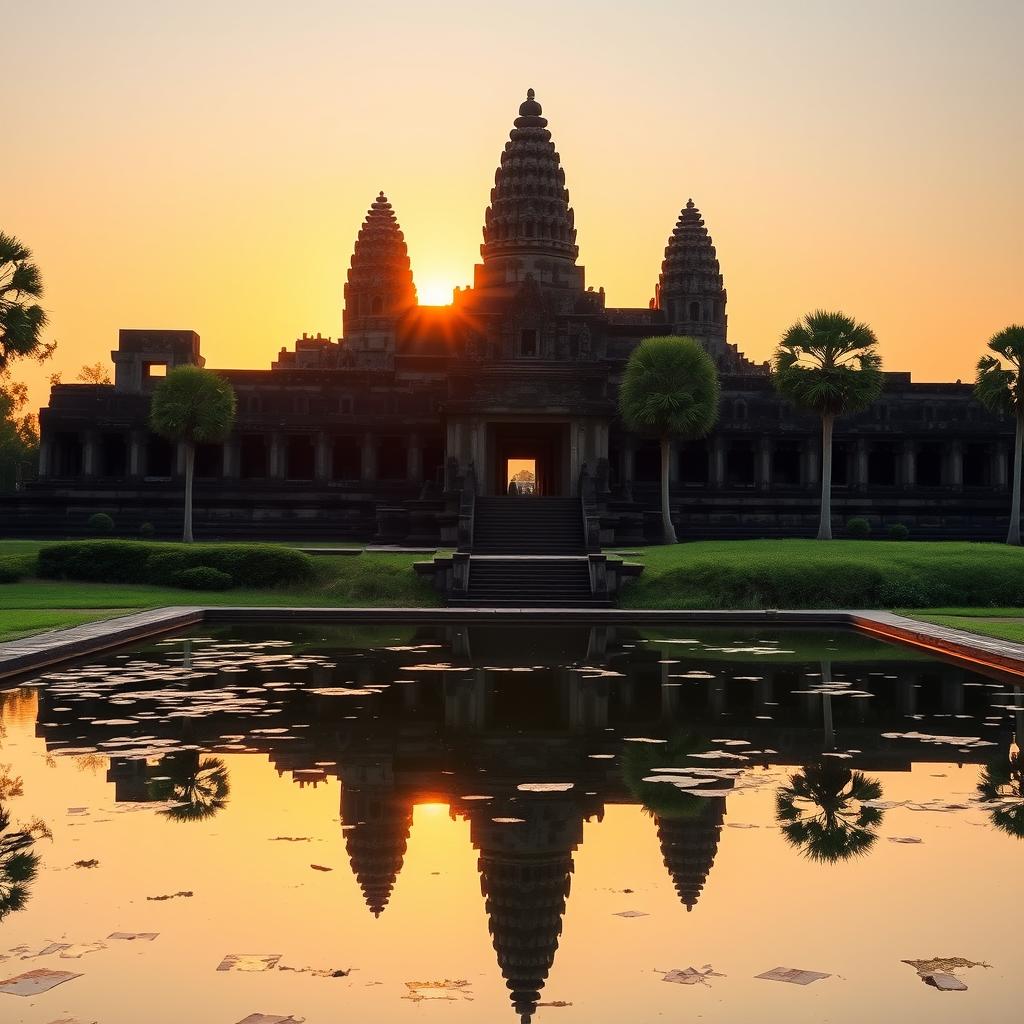
Cambodia
কম্বোডিয়া
Important Notice
This content is AI-generated and under editorial review. Visa rules can change at any time. Always verify the latest requirements with the relevant embassy or immigration authority before making travel decisions.
30
days max stay
6 months
passport validity required
Khmer
official language
English spoken
KHR
currency
About
The capital Phnom Penh (population ~2.3 million) is the economic hub, home to most foreign businesses and the garment manufacturing sector. Siem Reap is the gateway to the UNESCO World Heritage Site of Angkor Wat, driving a major tourism industry. Sihanoukville, on the southern coast, has experienced rapid development driven by Chinese investment in casinos, construction, and special economic zones.
Cambodia's economy grew at an average of 7% annually between 2000-2019 (World Bank), making it one of the fastest-growing economies in the region. The garment, footwear, and travel goods sector accounts for roughly 75% of total exports. Construction has boomed since 2010, particularly in Phnom Penh and Sihanoukville. Tourism contributed approximately 12% of GDP pre-pandemic and has been recovering.
The country uses a dual-currency system: the Cambodian Riel (KHR) is the official currency, but the US Dollar (USD) circulates widely, particularly in urban areas. Most wages, rents, and significant transactions are denominated in USD.
Cambodia has a young population — median age approximately 27 years — and is a member of ASEAN. The official language is Khmer (spoken by over 95% of the population), with English increasingly used in business, tourism, and among younger urban Cambodians. The country is predominantly Theravada Buddhist (~97%).
Last updated: 2026-05-28
Entry & Visa Requirements
- Visa on Arrival
- 30-day Tourist Visa (T-class) available on arrival at international airports and major land borders. Fee: USD $30 (cash, exact change preferred). Requirements: passport with 6+ months validity, one recent passport-sized photo (4x6cm), completed application form (available at counter).
eVisa alternative: Apply online at evisa.gov.kh (official government portal). Fee: USD $30 + $6 processing fee = $36 total. Processing: approximately 3 business days. eVisa valid for single entry within 3 months of issuance. Accepted at Phnom Penh International Airport, Siem Reap International Airport, and select land borders (Poi Pet, Bavet, Cham Yeam).
IMPORTANT: Since 2024, air travelers must also complete the Cambodia e-Arrival Card (CeA) at arrival.gov.kh within 7 days before arrival. This is mandatory and separate from the visa.
Tourist visa can be extended once for an additional 30 days (total 60 days) at the Immigration Department in Phnom Penh. Cost: approximately USD $45. Extensions beyond 60 days are not available on tourist visas — you must convert to a different visa category.
Business Visa (E-class): Also available on arrival, USD $35. Allows longer stays and is renewable. This is the visa category foreign workers typically convert to before obtaining a work permit.
WARNING: Use only official websites (evisa.gov.kh, arrival.gov.kh). Numerous fraudulent copycat websites charge extra fees or misuse personal data. - Return ticket required
- No proof of funds required
Work Permit Pathway
STEP 1: Employer obtains a Business Visa (E-class) invitation for the worker.
STEP 2: Worker enters Cambodia on E-class visa ($35 on arrival).
STEP 3: Employer registers the worker through the Foreign Workers Centralized Management System (FWCMS) at fwcms.mlvt.gov.kh — an online one-stop portal launched to streamline applications.
STEP 4: Required documents: valid passport, employer's patent tax certificate, medical examination certificate (from approved Cambodian clinic), passport photo (4x6cm).
STEP 5: Work permit issued for 1 year, renewable annually.
DEADLINE: Application must be submitted within 90 days of entry into Cambodia (ASEAN Briefing, 2025).
QUOTA SYSTEM: Cambodian law limits foreign workers to a maximum percentage per company (typically 10% of total workforce), with exemptions for qualified investment projects registered with the CDC.
PENALTIES: Non-compliance fines can reach KHR 12,600,000 (approximately USD $3,150) per unauthorized worker (MLVT 2025 regulations).
PROHIBITED OCCUPATIONS: Certain occupations are restricted for foreign workers under MLVT Prakas 360, including massage therapist, hairdresser, gem polisher, and other roles where sufficient Cambodian workers are available.
COST: Work permit fee approximately USD $100-150 per year, plus medical examination costs.
Last updated: 2026-05-28
Overstay Penalties & Consequences
FINE STRUCTURE: The standard overstay fine is USD $10 per day. Some older sources cite $5-6/day for shorter overstays, but the $10/day rate is the currently enforced standard at major exit points (US State Department travel advisory; Vietnam Visa Embassy overstay guide).
MAXIMUM FINE: Fines cap at approximately USD $500 (50 days). Beyond this point, you enter serious legal territory.
DETENTION RISK: Overstays exceeding 30 days significantly increase the risk of arrest and detention. Cambodian immigration authorities may detain overstayers at immigration holding facilities pending deportation proceedings.
DEPORTATION: Severe overstayers face forced deportation at their own expense. This typically includes: flight costs, administrative fees, and potential overnight detention costs. Deportation results in a re-entry ban ranging from 1 to 5 years depending on the severity.
BLACKLISTING: Deportees are entered into Cambodia's immigration database and ASEAN-shared border control systems. This can affect entry to other ASEAN nations.
RECENT ENFORCEMENT TREND: Cambodia has significantly tightened immigration enforcement since 2024. In May 2026, authorities issued mass deportation orders for foreign nationals residing illegally, with jail terms and fines up to $8,000 for non-compliance (Khmer Times, May 2026).
PRACTICAL WARNING: Police and immigration checkpoints in Phnom Penh, Sihanoukville, and border areas routinely check foreign passports. An expired visa makes you vulnerable to immediate detention or on-the-spot demands.
RECOMMENDATION: If your visa is about to expire, extend it legally (Tourist: Immigration Dept in Phnom Penh; Business: through your employer/sponsor) or exit the country before expiry. The cost of a legal extension is far less than the legal and financial consequences of overstaying.
Last updated: 2026-05-28
Job Market
GARMENT SECTOR (DOMINANT): The garment, footwear, and travel goods industry is Cambodia's largest manufacturing sector, employing approximately 700,000-800,000 workers and generating over $12 billion in annual exports (GMAC, 2024). While the workforce is overwhelmingly Cambodian women (~80%), foreign workers fill supervisory, technical, and management roles — particularly from China, South Korea, and South Asia. ILO Better Factories Cambodia monitors working conditions across 600+ registered factories.
CONSTRUCTION: The construction sector has boomed since 2010, driven by Chinese, Korean, and Japanese investment. Major projects include high-rise developments in Phnom Penh, casino complexes in Sihanoukville, and infrastructure projects (expressways, ports, airports). Foreign workers — particularly Chinese nationals — are present in significant numbers, especially in Chinese-invested projects. Bangladeshi construction workers have been specifically recruited under a 2019 Bangladesh-Cambodia MOU for exchange of skills and worker recruitment (New Age BD).
SPECIAL ECONOMIC ZONES: Cambodia has over 20 active SEZs. Phnom Penh SEZ (PPSEZ) hosts ~100 companies (roughly half Japanese) with 20,000+ workers. Sihanoukville SEZ (SSEZ) has 209 enterprises (predominantly Chinese) with 32,000 job opportunities. SEZs offer one-stop-shop services including work permit facilitation.
TOURISM & HOSPITALITY: Pre-pandemic tourism contributed ~12% of GDP, centered on Siem Reap (Angkor Wat) and coastal areas. Major hotel chains (NagaWorld, Sokha Hotels, Hyatt Regency) employ thousands. Positions for foreigners include management, skilled culinary roles, and specialized services.
IT/BPO (EMERGING): A small but growing tech sector in Phnom Penh, with startups and outsourcing firms hiring foreign talent for software development, digital marketing, and BPO management roles.
FOREIGN WORKER QUOTAS: Cambodian law restricts foreign workers to a maximum of 10% of a company's total workforce. Exemptions apply to CDC-registered Qualified Investment Projects (QIPs). This quota is strictly enforced — employers must demonstrate that qualified Cambodian workers are unavailable before hiring foreigners (MLVT Prakas on Foreign Labour).
Last updated: 2026-05-28
Salary & Payments
| Sector | Min | Max | Currency |
|---|---|---|---|
| Garment Worker (Minimum Wage) | 208 | 250 | USD/mo |
| Construction Laborer | 200 | 350 | USD/mo |
| Hotel/Hospitality Staff | 150 | 300 | USD/mo |
| Skilled Trades (Electrician/Welder) | 300 | 500 | USD/mo |
| Agriculture/Plantation | 150 | 250 | USD/mo |
| IT/BPO Entry Level | 300 | 600 | USD/mo |
| Factory Supervisor | 350 | 600 | USD/mo |
| Domestic Worker | 120 | 200 | USD/mo |
PAYMENT COMPLIANCE: ILO Better Factories Cambodia reports that compliance with minimum wage requirements for regular workers reached 99% across monitored factories (22nd Synthesis Report). However, compliance for casual workers is lower at 89%. The program monitors 600+ factories and has been operating since 2001.
OVERTIME AND DEDUCTIONS: While base wages are generally paid, workers frequently report excessive overtime requirements (sometimes exceeding legal limits of 2 hours/day) and unauthorized deductions. The ILO monitoring program has flagged these as recurring non-compliance areas.
DIGITAL WAGE TRANSITION: Cambodia is actively transitioning garment sector wages from cash to digital payments (ILO/World Bank initiative). This improves transparency and audit compliance but is not yet universal.
NON-GARMENT SECTORS: Salary data for construction, hospitality, and other sectors is less standardized. Wages in these sectors are typically negotiated individually between employer and worker. The ranges listed above are approximate industry averages compiled from job postings and sector reports — actual compensation varies significantly by employer, location, and worker experience.
COMPARISON WITH BANGLADESH: Cambodia's garment minimum wage ($208/month) is comparable to but slightly higher than Bangladesh's garment minimum wage (approximately BDT 12,500 or ~$105/month as of 2024). However, Cambodia's dual-currency USD economy means workers can save and remit in dollars, avoiding exchange rate risk.
WARNING FOR BANGLADESHI WORKERS: Verify all salary terms in writing before accepting employment. Demand a copy of your employment contract in a language you understand. Report unpaid wages to MLVT or contact the Bangladesh embassy in Bangkok (which covers Cambodia).
Last updated: 2026-05-28
Where to Apply
Cambodia eVisa Portal (Government)
Official PortalVisa Application
Official government portal for electronic visa applications. Tourist eVisa costs USD $36 (including processing fee), approved in approximately 3 business days. Valid for single entry within 3 months. Accepted at Phnom Penh and Siem Reap airports plus select land borders. WARNING: Use only this official URL — numerous copycat sites charge extra or steal data.
Verified: 2026-05-28
MLVT Foreign Workers System (FWCMS)
Official PortalWork Permit Processing
The official Foreign Workers Centralized Management System — an online one-stop portal for all work permit and employment card applications. Employers register here to sponsor foreign workers. Applications must be submitted within 90 days of entry. The system handles new permits, renewals, and status checks. As a worker, verify your employer has an active FWCMS account before accepting any offer.
Verified: 2026-05-28
Council for Development of Cambodia (CDC)
Official PortalInvestment & Large Project Employment
Cambodia's highest decision-making body for private sector investment. Oversees Qualified Investment Projects (QIPs) which receive exemptions from the 10% foreign worker quota. The Cambodian Investment Board (CIB) and Cambodian Special Economic Zone Board (CSEZB) are CDC's operational arms. If you are being recruited for a large-scale project, verify the employer's QIP registration with CDC.
Verified: 2026-05-28
National Employment Agency (NEA)
Official PortalGovernment Job Matching
Government-operated employment service established in 2009. Provides job matching, career guidance, and labor market information. Website and mobile app (NEA Job Search, available on iOS and Android) allow job seekers to search by occupation and location. Also operates physical job centers across Cambodia. Primarily serves Cambodian job seekers but posts from international employers are listed.
Verified: 2026-05-28
Phnom Penh Special Economic Zone (PPSEZ)
Major EmployerManufacturing (Garment, Electronics, Auto Parts)
Cambodia's flagship SEZ, operational since 2008. Hosts approximately 100 companies — roughly half Japanese — including Toyota, Yamaha, and Coca-Cola. Produces garments, electrical parts, automotive components, and pharmaceuticals. Over 20,000 workers employed. Offers one-stop services for business registration, customs, and work permits. Contact PPSEZ management for employer introductions.
Verified: 2026-05-28
Sihanoukville Special Economic Zone (SSEZ)
Major EmployerManufacturing (Garment, Footwear, Construction Materials)
Joint Cambodia-China developed SEZ with 209 enterprises and 32,000 job opportunities. Manufactures clothes, shoes, luggage, medical supplies, machinery, construction materials, auto parts, and photovoltaic materials. 3km from Sihanouk Airport, 12km from Sihanoukville Port. Import/export value reached USD $2.49 billion (2025). NOTE: Majority Chinese-owned firms — Mandarin is the primary working language in most SSEZ companies.
Verified: 2026-05-28
NagaCorp (NagaWorld Casino & Hotels)
Major EmployerHospitality & Gaming
Cambodia's largest integrated hotel and casino complex, publicly listed on Hong Kong Stock Exchange. Over 1,658 rooms and suites. Employs thousands of workers including foreign nationals in management, gaming operations, F&B, and specialized hospitality roles. Active careers page at nagaworld.com/careers. NOTE: Has experienced labor disputes — research current worker conditions before accepting offers.
Verified: 2026-05-28
Sokha Hotels & Resorts
Major EmployerHospitality (Hotels)
Cambodian-owned hotel chain under Sokimex Investment Group, founded in 2004. Operates seven 5-star properties across Phnom Penh, Siem Reap, Sihanoukville, and Battambang. Over 3,000 employees. Actively recruits for management, culinary, and hospitality service positions via their corporate career page. Offers competitive salary and training programs for career development.
Verified: 2026-05-28
Chip Mong Group
Major EmployerConstruction, Retail & Hospitality
One of Cambodia's largest conglomerates with divisions spanning cement manufacturing (joint venture with Siam City Cement producing 5,000 tons/day), ready-mixed concrete (Chip Mong Industries), property development (Chip Mong Land), retail, and hospitality — operating Hyatt Regency Phnom Penh (250 rooms) and Fairfield by Marriott Phnom Penh. Employs across construction, manufacturing, property management, and hotel operations.
Verified: 2026-05-28
Last updated: 2026-05-28
Housing & Living
HOUSING: Shared rooms/apartments in Phnom Penh: USD $100-200/month in local neighborhoods (Toul Kork, Russey Keo). Studio apartments: $200-350. One-bedroom apartment in city center: $400-500 (BKK1, Tonle Bassac). Outside Phnom Penh — Siem Reap: $80-150 for a shared room; Sihanoukville: $100-200 (prices have increased due to Chinese investment). Workers in SEZs often have employer-provided dormitory housing or subsidized shared accommodations nearby (Numbeo, 2026; Cambodianess).
FOOD: Local street food and market meals: $1-3 per meal. Rice dishes, noodle soup (kuy teav), and simple plates available everywhere for under $2. Monthly food budget cooking at home: $100-150 using local markets. Monthly eating out regularly: $200-350. Imported goods (Western brands) are significantly more expensive — expect 2-3x local prices.
TRANSPORT: Motorbike rental: $50-80/month (most common local transport). Tuk-tuks: $1-3 per short trip. Ride-hailing apps (Grab, PassApp) available in Phnom Penh and Siem Reap. Public bus service limited. Monthly transport budget: $50-100 in Phnom Penh.
UTILITIES: Electricity: $30-80/month depending on AC usage (Cambodia has high electricity costs by regional standards). Water: $5-10/month. Mobile phone plan with data: $5-10/month. Internet (apartment WiFi): included in many rentals or $20-30/month separately.
HEALTHCARE: Public healthcare facilities are basic. Private hospitals in Phnom Penh (Royal Phnom Penh Hospital, Calmette Hospital) provide adequate care but at significant cost ($50-100+ per consultation). Health insurance strongly recommended. For serious medical issues, many expats travel to Bangkok (1 hour flight).
OVERALL MONTHLY BUDGET: A foreign worker living modestly in Phnom Penh should budget USD $400-600/month (shared housing, local food, basic transport). A comfortable lifestyle requires $800-1,200/month.
Last updated: 2026-05-28
Social & Culture
DIPLOMATIC REPRESENTATION: Bangladesh does not have a resident embassy in Phnom Penh as of 2026. Consular services are handled by the Bangladesh Embassy in Bangkok, Thailand. Embassy officials from Bangkok periodically visit Cambodia to assist Bangladeshi nationals. Khmer Times (2024) has reported calls for Bangladesh to establish a dedicated embassy in Phnom Penh given the growing worker population. In emergencies, contact the Bangladesh Embassy in Bangkok: +66 2 390 0069.
RELIGIOUS LIFE: Cambodia is approximately 97% Theravada Buddhist. However, the Cham Muslim community (descendants of the Champa kingdom) makes up approximately 2-3% of the population and is concentrated in certain areas of Phnom Penh (along the Tonle Sap and Mekong riverbanks), Kampong Cham, and other provinces. Several mosques exist in Phnom Penh — Al-Serkal Mosque (near the Central Market) is one of the most prominent. Halal food is available in Cham neighborhoods and increasingly in tourist areas. Muslim-friendly restaurants can be found along Street 240 and in the Chroy Changvar area.
LANGUAGE: The official language is Khmer, spoken by over 95% of the population. English is widely spoken in Phnom Penh, Siem Reap, and tourist areas — more so than in many Southeast Asian countries. Mandarin Chinese is increasingly prevalent due to Chinese investment, particularly in Sihanoukville. Basic Khmer phrases are appreciated by locals and recommended for daily interactions.
CLIMATE: Tropical monsoon climate very similar to Bangladesh — hot and humid year-round. Wet season (May-October) and dry season (November-April). Temperatures typically 25-35°C. Bangladeshi workers generally adapt well to the climate.
SAFETY: Phnom Penh is generally safe for foreign workers, though petty crime (bag snatching, phone theft) occurs, particularly targeting foreigners on motorbikes. Sihanoukville has experienced increased crime associated with rapid development and the casino industry. Avoid carrying large amounts of cash. Register with your embassy and keep copies of all documents.
CULTURAL ADAPTATION: Cambodian culture shares some similarities with Bangladeshi culture — respect for elders, importance of family, conservative dress expectations (particularly for women). Buddhism permeates daily life, and understanding basic Buddhist etiquette (removing shoes before entering temples, not pointing feet at people or Buddha images) is important. Cambodians are generally welcoming to South Asian visitors.
BANKING: Cambodia's banking sector is developing. Wing and ABA Bank offer mobile banking popular with workers. International transfers via Western Union, MoneyGram, or mobile money services are available. The USD-based economy simplifies remittances to Bangladesh compared to countries with local-currency-only wages.
Last updated: 2026-05-28
Business Opportunities
FOREIGN OWNERSHIP: The Law on Investment (2021) permits 100% foreign ownership of companies in most sectors. Exceptions include cigarette manufacturing, movie production, rice milling, gem mining and processing, and certain newspaper publishing — these require local equity participation or prior government authorization. Land ownership is constitutionally restricted to Cambodian citizens, but foreigners can hold long-term leases (up to 50 years, renewable) or own upper-floor condominium units.
QUALIFIED INVESTMENT PROJECTS (QIPs): The Council for Development of Cambodia (CDC) administers QIP registration, which provides tax incentives including: income tax exemption for up to 9 years, duty-free import of equipment and construction materials, and streamlined work permit processing for foreign staff. QIP approval takes approximately 20 working days through the online portal — 10 days faster than the previous law (CDC, 2022).
SPECIAL ECONOMIC ZONES: Cambodia's 20+ SEZs offer additional incentives: no customs duties on imported raw materials for re-export, one-stop administrative services, and proximity to transport infrastructure. Phnom Penh SEZ and Sihanoukville SEZ are the largest, hosting manufacturers from Japan, China, Korea, and South Asia.
OPPORTUNITIES FOR BANGLADESHIS: (1) Garment supply chain — fabric, accessories, and packaging supply to Cambodia's USD $12B+ garment export sector. Bangladesh's textile manufacturing experience is directly relevant. (2) Construction materials import — cement, steel, and fittings for Cambodia's construction boom. (3) Restaurant/food business — halal food demand from Cham Muslims (~500,000+) and Muslim tourists is underserved. (4) IT/BPO services — software development and outsourcing, leveraging Cambodia's lower costs and ASEAN market access.
PRACTICAL BARRIERS: (1) Land ownership restriction for foreigners requires leasehold or nominee arrangements. (2) Corruption remains significant — Cambodia ranks 150th out of 180 countries on Transparency International's Corruption Perceptions Index (2023). (3) Khmer language proficiency is essential for local business operations and government interactions. (4) Banking access for foreign-owned businesses requires extensive documentation and may face delays. (5) Intellectual property enforcement is weak.
COMPANY REGISTRATION: Process through the Ministry of Commerce takes approximately 1-2 months. Costs include registration fees ($200-500), legal fees, and ongoing patent tax ($150-300/year depending on business category). Many foreign entrepreneurs use local law firms (BNG Legal, DFDL, VDB Loi) to navigate registration.
BANGLADESH-CAMBODIA TRADE: Bilateral trade is relatively modest but growing. The 2019 MOU on worker exchange signals strengthening ties. Cambodia's ASEAN membership provides access to the ASEAN Free Trade Area, which can benefit Bangladeshi businesses establishing regional operations.
Last updated: 2026-05-28
Content Quality
AI Generated — Under ReviewVerify with Embassy
Visa rules change frequently. Always verify the latest entry requirements with the embassy or consulate of your destination country before making travel plans.
View Embassy DirectoryCost of Living
Cambodia is one of the most affordable countries in Southeast Asia for living costs. The widespread use of US Dollars alongside the Cambodian Riel (KHR) simplifies financial management for foreign workers — most rents, salaries, and significant transactions are denominated in USD. HOUSING: Shared rooms/apartments in Phnom Penh: USD $100-200/month in local neighborhoods (Toul Kork, Russey Keo). Studio apartments: $200-350. One-bedroom apartment in city center: $400-500 (BKK1, Tonle Bassac). Outside Phnom Penh — Siem Reap: $80-150 for a shared room; Sihanoukville: $100-200 (prices have increased due to Chinese investment). Workers in SEZs often have employer-provided dormitory housing or subsidized shared accommodations nearby (Numbeo, 2026; Cambodianess). FOOD: Local street food and market meals: $1-3 per meal. Rice dishes, noodle soup (kuy teav), and simple plates available everywhere for under $2. Monthly food budget cooking at home: $100-150 using local markets. Monthly eating out regularly: $200-350. Imported goods (Western brands) are significantly more expensive — expect 2-3x local prices. TRANSPORT: Motorbike rental: $50-80/month (most common local transport). Tuk-tuks: $1-3 per short trip. Ride-hailing apps (Grab, PassApp) available in Phnom Penh and Siem Reap. Public bus service limited. Monthly transport budget: $50-100 in Phnom Penh. UTILITIES: Electricity: $30-80/month depending on AC usage (Cambodia has high electricity costs by regional standards). Water: $5-10/month. Mobile phone plan with data: $5-10/month. Internet (apartment WiFi): included in many rentals or $20-30/month separately. HEALTHCARE: Public healthcare facilities are basic. Private hospitals in Phnom Penh (Royal Phnom Penh Hospital, Calmette Hospital) provide adequate care but at significant cost ($50-100+ per consultation). Health insurance strongly recommended. For serious medical issues, many expats travel to Bangkok (1 hour flight). OVERALL MONTHLY BUDGET: A foreign worker living modestly in Phnom Penh should budget USD $400-600/month (shared housing, local food, basic transport). A comfortable lifestyle requires $800-1,200/month.
Free Tools to Help You Apply
Apply directly to overseas employers.
All tools are free. Cover letter and contract checker require a free account.
Before You Travel
Visa-free entry is just the first step. Real preparation matters.
- • Passport validity (6+ months beyond travel date)
- • Return/onward ticket booking
- • Proof of funds documentation
- • Currency exchange arrangement
- • Vaccinations (per destination requirements)
- • Emergency contacts (embassy, family)
Sponsored Agencies
EuroStaff Solutions
Licensed EU recruiter since 2015
View profile →BritishWork BD
UK and Ireland recruitment specialists
View profile →NEW STAR RECRUITING AGENCY
Mk Nasir uddin
View profile →France Recruit Pro
Direct French site contracts
View profile →Sponsored content. Verify agencies with BMET before any payment.
Last verified
28 May 2026
Visa rules may change — always verify before travel.


